

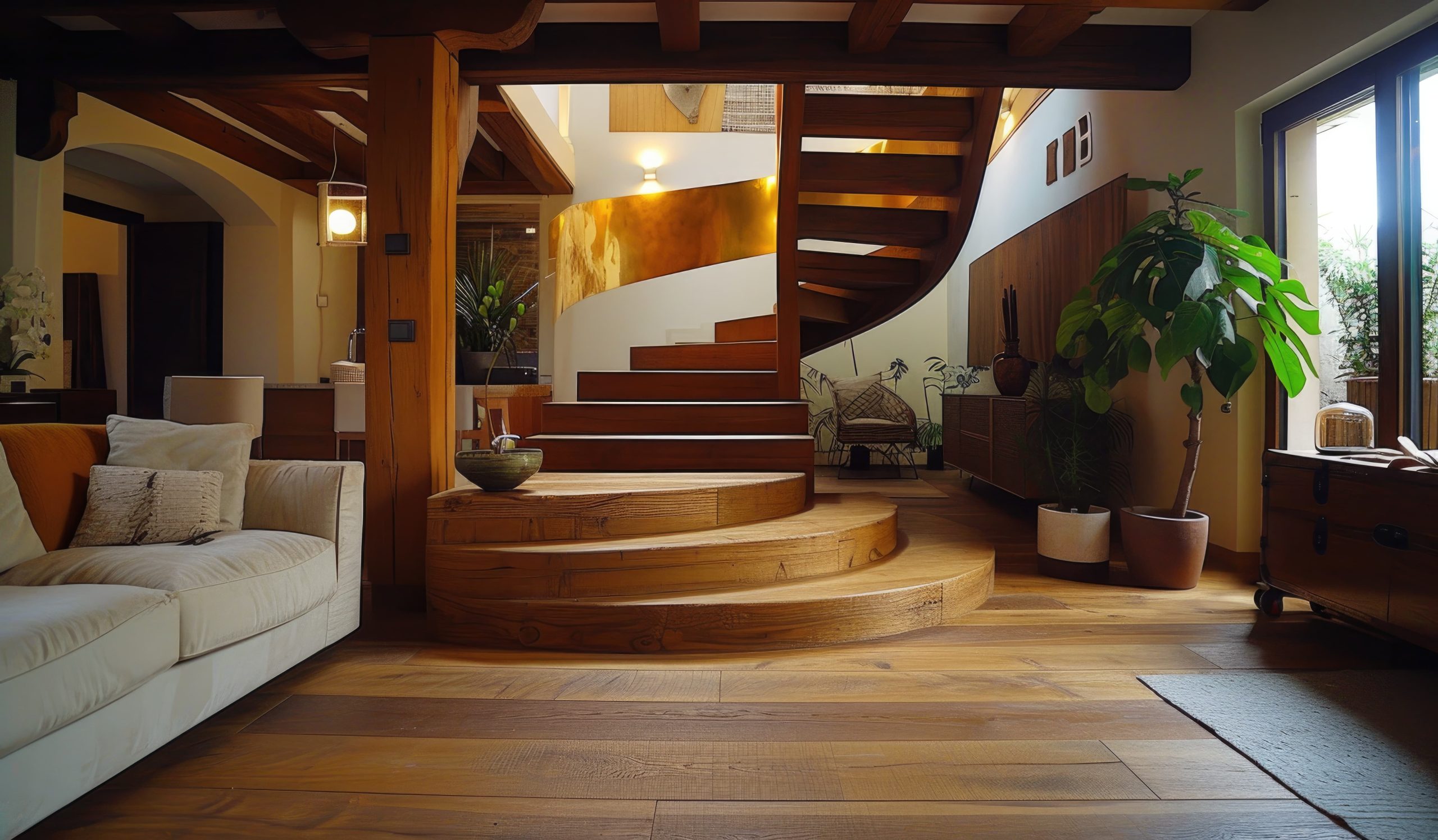
Should you choose light or dark hardwood floors? The answer depends on more than current design trends. Room size, natural light, pets, cleaning habits, furniture, wood species, and the overall atmosphere you want to create should all influence the decision.
Light hardwood floors make rooms feel brighter and more open while generally concealing dust, pet hair, and minor scratches. Dark hardwood floors create stronger contrast and a rich, sophisticated appearance, but they usually require more frequent cleaning to maintain that look.
In 2026, warm natural oak, honey, beige, and medium-brown tones are receiving significant attention. However, dark wood floors are not out of style. Deep walnut, warm brown, and espresso shades continue to work beautifully in well-lit rooms and interiors designed around intentional contrast.
This guide compares light vs. dark hardwood floors to help you choose the best color for your home.
Light vs. Dark Hardwood Floors: Quick Comparison
| Feature | Light hardwood floors | Dark hardwood floors |
|---|---|---|
| Effect on room size | Makes rooms feel larger | Can make rooms feel smaller |
| Light reflection | Reflects more light | Absorbs more light |
| Visibility of dust | Less noticeable | More noticeable |
| Pet hair | Often easier to conceal | Light pet hair is highly visible |
| Scratches | Usually less visible | Often easier to see |
| Overall style | Natural, airy and casual | Rich, elegant and dramatic |
| Best room size | Small or large rooms | Usually best in larger rooms |
| Maintenance appearance | More forgiving | Requires more visual upkeep |
| Contrast | Soft and flexible | Strong and defined |
| Popular design styles | Scandinavian, coastal, organic modern | Traditional, luxury, contemporary |
These are general differences. The wood species, grain, finish sheen, and amount of color variation also affect how a floor looks and performs.
Are Light or Dark Hardwood Floors More Popular in 2026?
Light and natural hardwood floors remain popular in 2026, particularly warm white oak, blonde wood, honey, beige, and neutral brown tones. These colors fit organic modern, Scandinavian, coastal, minimalist, and transitional interiors.
The direction is warmer and more natural than the cold gray flooring commonly used in previous years. Medium-brown tones are also popular because they provide warmth without the maintenance demands or visual weight of an extremely dark floor.
Dark hardwood floors have not disappeared. Warm walnut, chestnut, chocolate brown, and refined espresso tones are being used to create depth and contrast. Rather than covering every modern interior, dark floors are now often selected more intentionally for larger rooms, historic properties, dramatic kitchens, and homes with abundant natural light.
Learn more about current colors, plank widths, and finishes in our guide to 2026 flooring trends for modern homes.
Advantages of Light Hardwood Floors
Light hardwood creates an open and relaxed appearance. Depending on the wood species and stain, light floors can range from pale blonde and natural beige to warm honey and soft greige.
Light Floors Make Rooms Feel Larger
Light colors reflect more natural and artificial light. This can make small rooms, narrow hallways, apartments, and spaces with lower ceilings feel more open.
Light flooring also creates less visual contrast between the floor and light-colored walls. This allows the boundaries of the room to feel softer and more expansive.
Light Floors Conceal Dust and Minor Scratches
Dust, footprints, and minor surface marks are generally less noticeable on light or medium-tone floors than on very dark floors.
This makes light hardwood a practical choice for:
- Homes with children
- Homes with pets
- High-traffic areas
- Busy households
- Homeowners who prefer lower visual maintenance
A light floor will still need regular care, but small amounts of dust and everyday wear are less likely to attract immediate attention.
Light Hardwood Is Easy to Coordinate
Natural and light wood floors work with many wall colors, furniture styles, and materials.
They pair particularly well with:
- White and cream walls
- Beige and warm neutral colors
- Black accents
- Natural stone
- Wood furniture
- Soft greens and blues
- Modern or traditional cabinets
Because light hardwood creates a neutral foundation, homeowners can change furniture or wall colors without needing to replace the flooring.
Light Floors Highlight Natural Wood
A clear or lightly stained finish allows more of the wood’s natural color, grain, and variation to remain visible. This is especially desirable with white oak and other species selected for their character.
Visit our wood species comparison to see how the color, grain, hardness, and characteristics of different woods compare.
Disadvantages of Light Hardwood Floors
Light floors are practical, but they are not ideal for every room or design.
Possible disadvantages include:
- Dark liquids and stains may be more noticeable.
- Some pale colors can feel washed out under very bright lighting.
- Light floors may not provide enough contrast in an all-neutral room.
- Yellow or red undertones may become more apparent depending on the wood.
- Achieving a pale color on naturally warm wood may require additional preparation.
Light stain samples should be tested directly on the floor. A shade that looks neutral on white oak may appear pink, yellow, or orange on red oak.
Advantages of Dark Hardwood Floors
Dark hardwood floors create a grounded, defined appearance. Popular dark colors include walnut, chestnut, dark brown, espresso, and near-black stains.
Dark Floors Create Strong Contrast
A dark floor provides a striking foundation for light walls, pale cabinets, and neutral furniture. This contrast can make architectural elements and furnishings stand out.
Dark floors work particularly well with:
- White or cream walls
- Light kitchen cabinets
- Large windows
- High ceilings
- Metallic accents
- Traditional millwork
- Contemporary furniture
Dark Hardwood Can Look Rich and Sophisticated
Deep brown stains can bring warmth, depth, and formality to a room. They are commonly used in traditional homes, dining rooms, studies, formal living rooms, and high-contrast contemporary interiors.
Warm dark brown typically feels more natural and timeless than a flat black floor.
Dark Stains Can Emphasize Grain and Variation
Depending on the stain and wood species, dark colors can enhance grain patterns and create greater visual depth. Medium-dark stains such as walnut or chestnut may preserve more visible variation than an extremely dark espresso or black stain.
For available color directions, see our updated Minwax floor stain color guide.
Disadvantages of Dark Hardwood Floors
The biggest disadvantage is visual maintenance. Dark floors frequently show:
- Dust
- Light-colored pet hair
- Footprints
- Cleaning streaks
- Crumbs
- Surface scratches
- Dents and scuffs
Direct sunlight and glossy finishes can make these marks even more visible.
Dark floors can also make a small or poorly lit room feel more enclosed. They are usually most successful when balanced by light walls, sufficient lighting, and an appropriate room size.
Are Dark Wood Floors Out of Style in 2026?
No. Dark wood floors are not out of style in 2026, but the way they are used has changed.
Light and warm natural floors have broader popularity, while very dark espresso and near-black floors are used more selectively. Warm walnut, chestnut, and chocolate-brown colors remain relevant because they complement the current interest in natural materials and earthy interiors.
A dark floor is more likely to feel current when it:
- Has warm or natural undertones
- Allows some grain variation to remain visible
- Uses a matte or satin finish
- Is balanced with lighter walls and furnishings
- Receives sufficient natural or layered artificial light
- Complements rather than overwhelms the room
Choosing a floor solely because it is trending can lead to disappointment. Hardwood may last for decades, so the color should work with your home and lifestyle beyond 2026.
Do Dark Floors Make a Room Look Smaller?
Dark flooring can make a room feel more enclosed because it absorbs light and creates a strong visual boundary. The effect is most noticeable in small rooms with limited windows, low ceilings, and dark walls.
However, dark floors do not automatically make every room look small. They can work successfully when the space includes:
- Large windows
- Light-colored walls
- Pale cabinets
- Adequate artificial lighting
- Limited visual clutter
- A consistent floor color between adjoining rooms
Using the same dark hardwood across connected spaces may create continuity, while frequent flooring transitions can visually divide the area.
Are Light Floors Better for Small Rooms?
Light hardwood is usually the safer choice for a small room because it reflects more light and creates a softer boundary between surfaces.
Natural white oak, light beige, honey, and subtle warm-neutral stains can make a compact bedroom, hallway, kitchen, or living area feel brighter.
To maximize the effect:
- Use a consistent floor throughout adjoining spaces.
- Select wider planks where appropriate.
- Pair the floor with light or medium wall colors.
- Keep window coverings open and simple.
- Choose matte or satin instead of high gloss.
- Avoid excessive contrast between rooms.
Light or Dark Hardwood Floors for a Kitchen
Both can work in a kitchen, but lifestyle and design contrast matter.
Light hardwood is useful when the kitchen:
- Is small or has limited natural light
- Has dark cabinets
- Experiences frequent family activity
- Needs to conceal dust and crumbs
- Connects to other light-floored spaces
Dark hardwood can work when the kitchen:
- Has light or white cabinets
- Receives abundant natural light
- Has enough space for strong contrast
- Is cleaned frequently
- Connects to other dark hardwood areas
Regardless of color, spills should be cleaned immediately. Read more about using hardwood flooring in kitchens.
Light or Dark Hardwood Floors for a Bedroom
Light hardwood can make a small bedroom feel calm, airy, and spacious. It works well with soft textiles, pale walls, and minimalist furniture.
Dark hardwood creates a warmer, more intimate bedroom. It pairs well with cream bedding, upholstered furniture, and layered lighting.
The best option depends on whether you want the bedroom to feel open and energizing or cozy and grounded.
Which Floor Color Is Better for Homes With Pets?
Light-to-medium hardwood generally conceals pet hair, dust, and minor claw marks better than a very dark floor. However, the pet’s coat color and the amount of grain variation also matter.
For a pet-friendly floor:
- Avoid extremely dark, uniform stains.
- Choose a matte or satin finish.
- Select wood with visible grain and natural variation.
- Keep pet nails trimmed.
- Use floor-safe mats near doors and water bowls.
- Clean accidents promptly.
Our guide to hardwood floor colors that hide dirt and scratches provides more detailed comparisons.
Which Finish Works Best With Light and Dark Floors?
The finish sheen changes how the color appears and how easily everyday wear can be seen.
A matte finish reflects less light and usually conceals scratches, dust, and footprints more effectively. Satin provides a soft sheen that highlights the grain without becoming highly reflective.
Dark hardwood is generally easier to maintain visually with matte or satin rather than gloss. Light hardwood works well with either matte or satin, depending on whether you prefer a natural or slightly polished look.
Compare both options in our guide to matte vs. satin hardwood floor finishes.
What Furniture Goes With Light Hardwood Floors?
Light hardwood provides a flexible background for both light and dark furniture.
Try pairing it with:
- Black furniture for strong contrast
- Medium or dark wood furniture for warmth
- White and cream upholstery for an airy appearance
- Natural fabrics and woven textures
- Warm metals such as brass
- Muted green, blue, or terracotta accents
Avoid trying to match every wood surface exactly. Coordinated undertones are usually more important than identical colors.
What Furniture Goes With Dark Hardwood Floors?
Dark hardwood looks best when the room includes enough lighter elements to prevent the design from feeling heavy.
Consider:
- Cream, beige, or light-gray upholstery
- White or warm-neutral walls
- Light natural rugs
- Pale wood or painted furniture
- Glass and metal accents
- Layered lighting
- Green plants and natural textiles
Dark furniture can also work, but it should be separated visually from the floor with a lighter rug or contrasting upholstery.
Can You Make Dark Hardwood Floors Lighter?
Solid hardwood floors can often be changed from dark to light through complete professional sanding and refinishing. The dark stain and finish must be removed to expose clean wood before a lighter stain or clear finish is applied.
However, the result depends on:
- Wood species
- Previous stain penetration
- Age and condition of the boards
- Remaining thickness of the floor
- Gaps, repairs, and replaced boards
- Contamination from previous products
- Whether the flooring is solid or engineered
Engineered hardwood has a thinner real-wood wear layer and may only tolerate limited sanding. Some engineered floors cannot be safely refinished.
A test area can show whether the existing dark stain can be removed evenly. Learn more about professional hardwood floor sanding and refinishing.
Can Light Hardwood Floors Be Made Darker?
In many cases, yes. Existing solid hardwood can be sanded to bare wood and stained a darker color.
Before choosing the stain, test several samples on the actual floor. Wood species and natural undertones can significantly change the result.
Red oak may add warmth or red undertones, while white oak usually produces a more neutral brown. Maple and certain other dense woods may absorb dark stain unevenly and require additional preparation.
Will Light or Dark Hardwood Increase Home Value?
There is no single floor color guaranteed to produce a higher resale value. Buyers typically respond best to hardwood that is:
- Professionally installed or refinished
- In good condition
- Consistent between connected rooms
- Compatible with the home’s architecture
- Neutral enough to work with different furniture
- Properly maintained
Natural light, warm-neutral, and medium-brown floors often appeal to a broad range of buyers. Dark floors can also add value when they complement the property and remain in excellent condition.
How to Choose Between Light and Dark Hardwood
Consider these questions:
- How much natural light does the room receive?
- Is the room small, large, or open-concept?
- Do you have children or pets?
- How visible will dust and scratches be?
- What colors are the walls, cabinets, and furniture?
- Do you prefer a bright or dramatic interior?
- Will the new color connect with existing floors?
- How frequently do you want to clean?
- Does the home have a modern, traditional, or historic style?
- Will you still like the color after current trends change?
The most reliable approach is to apply multiple stain samples directly to the actual floor and review them throughout the day.
Frequently Asked Questions
Are light or dark hardwood floors better?
Light floors are generally better for small rooms, active homes, and homeowners who want less visible dust and scratching. Dark floors are better for creating contrast, richness, and a more dramatic interior. The right choice depends on the room and household.
What hardwood floor colors are trending in 2026?
Warm natural oak, honey, beige, greige, and medium-brown tones are prominent in 2026. Rich walnut and warm dark-brown floors are also being used for depth and contrast. Cold gray is less dominant than in previous years.
Are dark wood floors coming back in style?
Warm brown and walnut colors are receiving renewed attention. Very dark espresso floors remain an option, but they are generally used more selectively because they show dust and scratches easily.
Do light hardwood floors show dirt?
Light floors can show dark spills and stains, but they usually conceal everyday dust, light pet hair, and minor scratches better than dark floors.
What color hardwood makes a room look bigger?
Light natural, blonde, beige, and pale warm-neutral hardwood typically makes a room feel larger because these colors reflect more light.
Do dark hardwood floors show scratches?
Scratches are usually more noticeable on dark hardwood, especially when the scratch exposes lighter wood below the stain. A matte finish and visible grain variation can help conceal minor damage.
Is light or dark hardwood more timeless?
Both can be timeless when they complement the home. Natural, medium, and warm-brown colors usually have broader long-term appeal than extremely pale, gray, or near-black floors.
Should stairs match light or dark flooring?
Stairs do not always need to match perfectly, but their undertones and style should coordinate with the floor. If existing stairs and new flooring must be blended, professional sampling and color matching are recommended.
Professional Hardwood Floor Color Consultation in Baltimore, MD
Choosing between light and dark hardwood requires more than comparing online photographs. Wood species, existing stain, lighting, room size, finish sheen, and application technique all affect the final result.
Danzco Hardwood Floors has served Baltimore and surrounding Maryland communities since 1988. Our NWFA-certified team provides professional hardwood floor installation, refinishing, repairs, custom staining, and color matching.
We apply stain samples directly to the customer’s floor so each option can be reviewed under the home’s actual lighting.
Call (410) 788-5919 or contact Danzco Hardwood Floors online to request an estimate.


